For admissions or other details, call us on +91-9810479477

For admissions or other details, call us on +91-9810479477

News and Blog

PGDM • CAREER GUIDE

AI-Powered Management Careers in 2027: Why PGDM Graduates Need AI, Data Analytics & Leadership Skills

Management students collaborating on a laptop

The future of management isn’t about choosing between technology and people. It’s about learning how to bring the two together.

Imagine walking into your first management job in 2027. Your team uses artificial intelligence to analyse customer behaviour, prepare sales forecasts, automate reports and identify business opportunities. Instead of spending hours collecting information, you’re expected to interpret the findings, recommend solutions and make decisions. Would you be ready?

Businesses are changing, and so are their expectations from management graduates. Employers increasingly value professionals who understand business fundamentals, work confidently with data, use AI responsibly and communicate effectively with people. Developing AI skills for PGDM students is becoming an important part of preparing for a competitive workplace.

1. Why AI Is Changing Management Careers in 2027

Artificial intelligence is no longer limited to technology companies or software developers. Marketing managers use AI-assisted analytics to understand campaigns, financial analysts identify unusual spending patterns, HR professionals organise recruitment information, and operations managers analyse demand forecasts. Business consultants can use AI-assisted research to compare growth strategies.

In each situation, technology helps process information, but a person must interpret the results and take responsibility for decisions. AI can support management decisions, but effective managers still need judgement, creativity, accountability and leadership.

2. What Industry Research Says About AI and Future Jobs

The World Economic Forum’s Future of Jobs Report 2025 estimates that 39% of workers’ existing skills will change or become outdated between 2025 and 2030. It projects 170 million new jobs and 92 million displaced jobs globally by 2030, a net increase of 78 million. These are projections, not guaranteed employment outcomes. AI and big data are among the fastest-growing skill areas.

Microsoft’s 2025 Work Trend Index reported that 81% of surveyed leaders expected AI agents to be moderately or extensively integrated into their organisations’ AI strategies over the following 12–18 months. This reflects expectations rather than confirmed adoption.

For PGDM aspirants, the lesson is clear: business understanding and technological adaptability complement one another.

3. Seven Essential Skills for PGDM Graduates in 2027

AI literacy

Understand what AI can do, where it can help and where human verification is necessary. Use AI for research, productivity and analysis without blindly accepting generated information. Learn about privacy, data security and bias.

Data analytics and interpretation

Data becomes valuable when someone translates it into meaningful decisions. Excel, Power BI, visualisation and basic statistics can help students understand business performance. A dashboard might reveal declining revenue in a region; a capable manager investigates the reasons before recommending action.

Critical thinking and problem-solving

Managers must evaluate alternatives, question assumptions, identify risks and select appropriate solutions. Analytical thinking remains a leading core skill valued by employers.

Leadership and emotional intelligence

Technology cannot replace every aspect of motivating employees, resolving disagreements or building trust. Managers need empathy, active listening and the ability to guide teams through uncertainty.

Digital communication

Clear business writing, presentations and virtual collaboration are essential. Presenting data-backed recommendations in simple language distinguishes effective managers from people who merely understand numbers.

Business and financial understanding

Management graduates must understand revenue, costs, profitability, customers, operations and strategy. These fundamentals help evaluate whether technology investments create genuine business value.

Adaptability and continuous learning

Today’s tools may evolve significantly within a few years. Develop the confidence to learn new systems and update your skills throughout your career.

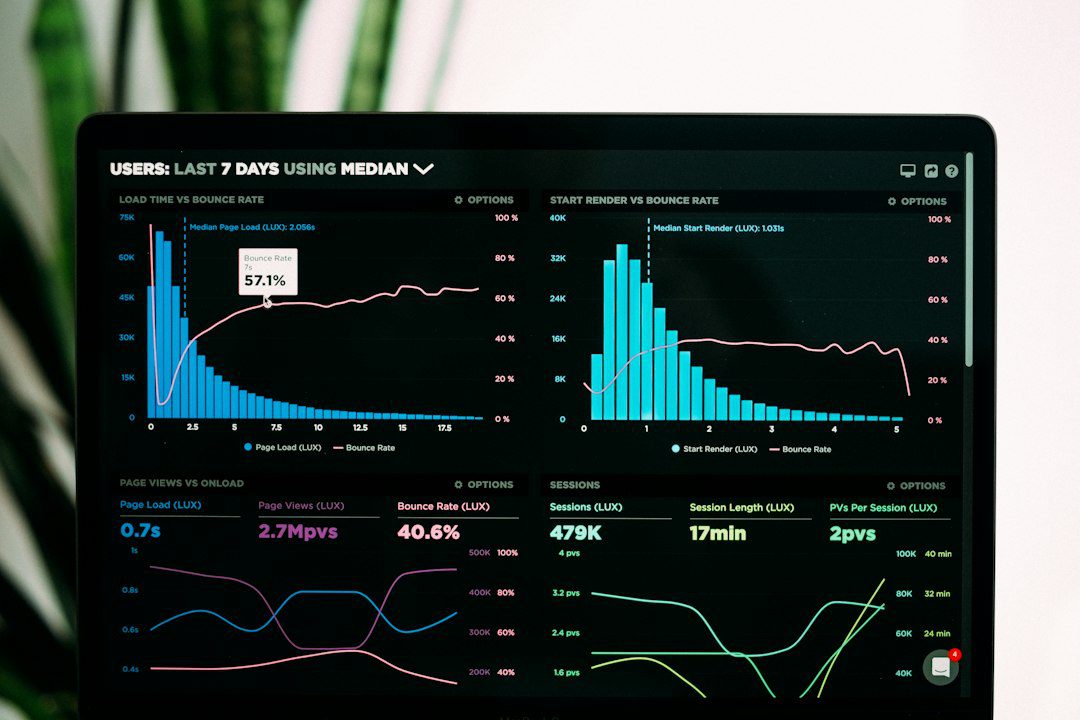
Business analytics dashboard with data visualisations

Data visualisation helps managers translate information into decisions. Photo: Luke Chesser / Unsplash.

4. How AI Is Transforming Major PGDM Specializations

Marketing

Marketing professionals use analytics to understand consumer behaviour, evaluate campaigns and improve customer engagement. AI can support segmentation, content research and campaign optimisation, while creativity and brand understanding remain essential. Potential paths include Digital Marketing Executive, Marketing Analyst, Brand Management Associate and Customer Insights Analyst.

Finance

Finance teams use digital systems for reporting, forecasting, fraud monitoring and financial analysis. AI-assisted tools can identify unusual transactions that deserve investigation, but professionals must understand accounting, risk and compliance. Potential paths include Financial Analyst, Risk Analyst and Financial Planning Analyst.

Human Resources

HR departments use digital platforms for recruitment administration, workforce planning and learning management. AI may help organise information, but employee decisions require fairness, confidentiality and human oversight. Potential paths include HR Analyst, Talent Acquisition Associate and HR Operations Executive.

Operations and Business Analytics

Operations managers work with supply chains, inventory, processes and resource allocation. Analytics can help forecast demand and identify inefficiencies. Potential paths include Business Analyst, Operations Analyst, Supply Chain Analyst and Management Trainee. These are possible career pathways, not guaranteed placement outcomes.

5. Do PGDM Students Need Coding Skills to Work with AI?

You do not necessarily need to become a programmer to use AI effectively in management. Specialist careers such as machine learning engineering require substantial programming and mathematical expertise, but many business roles focus on interpreting information, understanding customers and communicating recommendations.

  • Microsoft Excel for business analysis and reporting.
  • Power BI for dashboards and data visualisation.
  • AI assistants for research and productivity, with appropriate verification.
  • CRM platforms for sales and customer information.
  • Digital marketing analytics platforms for campaign measurement.

The important starting point is learning how to ask useful business questions and evaluate the answers.

6. Why Practical Learning Matters

Imagine two candidates attending a management job interview. The first explains that they know about artificial intelligence and business analytics. The second describes a project in which they analysed customer data, created a dashboard, identified a problem and presented recommendations. The second candidate can demonstrate how knowledge translates into decisions.

Useful learning experiences include industry projects, internships, case studies, presentations and collaborative problem-solving exercises. A marketing student might analyse publicly available campaign data; a finance student might build a financial dashboard using sample data; an HR student might prepare an engagement analysis using a fictional dataset. Such projects connect classroom concepts with workplace expectations.

Students discussing a group project in a classroom

Collaborative projects help develop communication and analytical skills. Photo: Vitaly Gariev / Unsplash (illustrative stock photograph).

7. How NDIIT's PGDM Curriculum Supports Future-Ready Management Learning

Choosing a PGDM institution involves looking beyond the course title. Examine the curriculum, practical exposure, specialization options, faculty guidance and approach to management development.

NDIIT’s two-year PGDM programme brings together foundational management subjects and applied learning. Its published course information includes Information Technology for Managers, Business Statistics, Data Science & Analytics, Business Communication & Digital Marketing, Marketing Research, Financial Management and Business Ethics & Corporate Governance.

Business statistics supports analytical reasoning, while marketing research helps students interpret customer information. Business communication and organisational behaviour develop interpersonal capabilities. Explore the PGDM programme and curriculum and confirm the latest syllabus and specialization availability with the admissions team.

8. How to Prepare for an AI-Powered Management Career During Your PGDM

First semester: Build strong business fundamentals

Focus on management principles, economics, accounting, communication and basic statistics. Become comfortable with spreadsheets and professional presentations before introducing advanced analytical tools.

Second semester: Explore analytics and digital business

Work with dashboards, business datasets and digital marketing concepts. Choose a small project connecting data analysis with a practical question, such as studying sales trends for a fictional retailer.

Third semester: Connect your specialization with AI

Marketing students can study campaign analytics, finance students can practise forecasting, HR students can examine workforce dashboards and operations students can explore demand planning. Build demonstrable projects rather than collecting certificates without practical application.

Fourth semester: Prepare for employment

Use internships, academic projects and placement preparation to strengthen your profile. Practise explaining business problems, presenting evidence and defending recommendations. Discuss how you used AI, what limitations you encountered and how you verified the results.

9. Will AI Replace Management Jobs in 2027?

It would be misleading to claim that AI will replace all managers or that management jobs are completely protected from automation. Routine reporting, basic information processing and repetitive administrative activities are particularly exposed. However, many management responsibilities involve uncertainty, relationships, negotiation, ethics and accountability.

The challenge is to avoid relying exclusively on repetitive tasks that technology may increasingly handle. The opportunity is to become the professional who understands the business problem, coordinates people and technology and delivers measurable results.

10. Choosing the Right PGDM Programme for 2027

Does the curriculum include relevant analytical and digital business subjects? Are students encouraged to participate in projects, presentations and internships? Does the programme develop communication, teamwork and leadership? Are specializations aligned with your interests? Can the institution explain its academic structure, admission requirements and career support clearly?

These questions are more useful than choosing a college based only on promotional claims. Review NDIIT’s PGDM course details and admissions information before making an informed decision.

Frequently Asked Questions

Is AI knowledge necessary for PGDM students in 2027?

AI knowledge is increasingly useful because businesses are adopting automation and data-driven tools. Students should understand basic concepts, responsible usage and practical applications. Advanced programming is not essential for every management career.

Which PGDM specialization is best for AI-related careers?

Business Analytics and IT are directly relevant to data-focused roles, but Finance, Marketing, HR and Operations also offer opportunities to apply AI. Choose according to your interests and strengths.

Can commerce and arts graduates learn AI and business analytics?

Yes. Begin with spreadsheets, introductory statistics, visualisation and business-focused AI applications. Advanced technical roles may require additional mathematics and programming.

What jobs can PGDM graduates pursue with analytics skills?

Depending on qualifications, graduates may explore Business Analyst, Marketing Analyst, Operations Analyst, Financial Analyst, HR Analyst and Management Trainee roles.

Will AI replace MBA and PGDM graduates?

AI may automate certain tasks, but that does not mean every management role will disappear. Analytical thinking, business knowledge, adaptability and interpersonal skills remain valuable.

What is the difference between AI literacy and data analytics?

AI literacy involves understanding AI capabilities, limitations and responsible use. Data analytics focuses on examining information to identify patterns and support decisions.

Does NDIIT offer data analytics subjects?

NDIIT’s published curriculum includes Data Science & Analytics, Business Statistics and Information Technology for Managers. Confirm the latest syllabus with the institution.

How can I apply for NDIIT's PGDM programme?

Review current eligibility and admission requirements and submit an application through the official website.

Conclusion: The Future Needs Managers Who Can Think Beyond Technology

Artificial intelligence is changing how organisations operate, but technology alone does not create successful businesses. Companies still need professionals who understand customers, interpret information, solve problems, lead teams and make responsible decisions.

For students preparing to enter the corporate world in 2027, the goal should not be to compete with AI at every task. Learn to use technology intelligently while strengthening the human capabilities that make effective management possible.

Take the Next Step Towards Your Management Career with NDIIT

Explore NDIIT’s two-year PGDM programme, discover available specializations and learn how its management curriculum can support your professional development.

Apply for PGDM Admission | Explore the PGDM Programme

Build your business knowledge. Strengthen your analytical thinking. Prepare to lead in a changing world.

Featured photograph: Vitaly Gariev / Unsplash. Stock imagery is illustrative and does not depict NDIIT facilities.

Submit your details
& Our Get Brochure

College Virtual View

NDIIT BUSINESS SCHOOL - TOP PGDM COLLEGE IN DELHI
  • Promoted and Driven by Industries Expert
  • Exclusive Business School
  • 50% Practical Exposure, 20% Field Work, & 30% Theory
  • 100% Placements & Internship
  • 50+ HR Professionals through HR Talks
  • Global Exposure
  • Startup Assistance
  • Multiple Certification Program
Learn, Transform, Achieve
To Know How,
Apply Now